
Tip of the Month - March 2026
The Current Sports Dilemma
Our approach to sports has a flaw. Current competitions and games are usually organized by fixed age-group categories. Research shows that this creates a major challenge in modern sports and is a key reason for the high dropout rate, which is estimated at 73% among 12- to 13-year-olds. There is also considerable resistance from coaches, clubs, and sports federations because it would require a ‘change’ in the current system. However, this mindset shows a lack of concern for supporting and ensuring the success and well-being of young athletes. Physical preparation, training, and competition need to be designed based on the LTAD model with a focus on the developmental – not the chronological age of the athletes, since the latter encompasses too many variances between specific age groups for boys and girls, and of course, between boys and girls (See Chart). This is important to understand because of the potential learning differences and athletes’ ability to perform required physical and technical skills, which brings to question the continuing practice of hiring coaches who were elite or professional athletes.
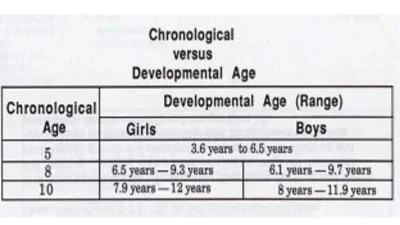

13-14-year-old: Same Chronological but different Developmental Age.
The pandemic showed parents how life could be without the ‘daily grind’ of driving kids to practices, making late-night dinners, and the ‘Uber drive’ during long 2-3-day age-group swim meets on weekends (parental comments!). This has impacted the return of many athletes and the recruiting process. Therefore, clubs need to provide more engaging and diverse programs to motivate swimmers to return and stay longer. This would include sport-specific activities (swimming) and a multi-sport approach that involves other sports, such as gymnastics, athletics, and soccer, to develop ‘all-around’ athletes.
Reference:
Including the Pictures:
Schloder, M.E. (2022). Personal Lecture Notes – NCCP Growth & Development. Calgary, Alberta, Canada.